Case Study
Mentorship App
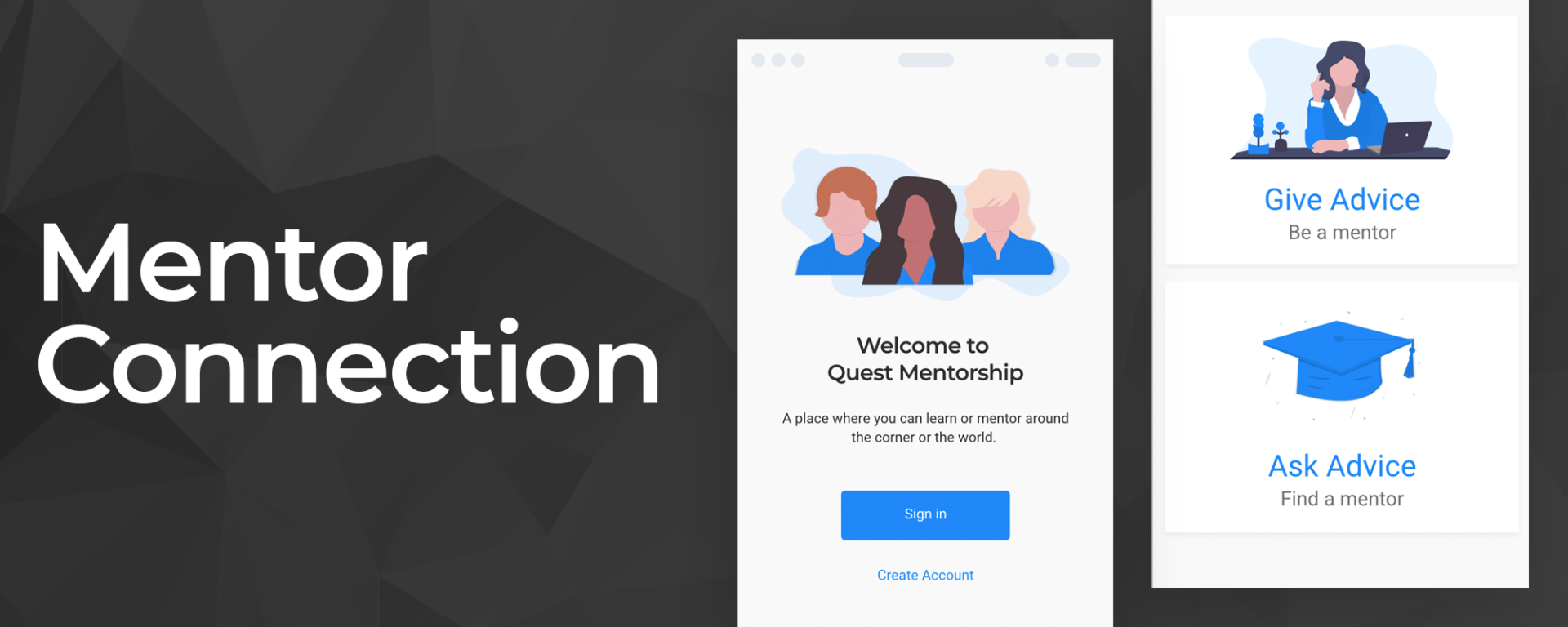
Mentor Connection was an exercise to refresh and extend my UX/UI knowledge. The goal was to help busy mentors connect with people seeking advice, and to design a seamless experience where mentors and mentees align on shared interests, location, and availability.
Situation
Mentoring is a relationship between two people with the goal of professional and personal development. The problem: mentors are often busy, committed to meetings, or have no time to connect with people seeking advice.
This concept explores how to match the right mentor with the right mentee. Matching well is a crucial step, relying on both sides' commitment and dedication to make the relationship a successful one for both.
Process
The process moved from research and ideation to design: open the questions, identify the underlying problem, construct viable solutions, and test theories for effectiveness.
Research Phase
Reading articles on mentorship, I grouped mentorship into two buckets: professional and personal. The research helped uncover common traits in how people connect, from a holistic point of view, across business and trade, industry and organization, technology, education, life choice, and religion.
I studied mentorship businesses, including Mentor (The National Mentoring Partnership) and Mentoring Complete, paying close attention to frictions such as negative, unwanted, or painful experiences. Understanding the benefits and challenges for both sides helped me explore solutions that address needs, desires, and the overall experience.
I interviewed a mentee, Trey, about his experience and how he met his mentor. They worked in different businesses. His mentor organically guided him in his business endeavors and shared specific knowledge that helped his newly founded company grow. Both benefited: when Trey's business did well, their working relationship and business opportunities grew. Trey's motivation was to make money, build a network, get advice, and create business opportunities.
Persona: Trey Baumann, co-founder and business owner in water damage restoration.
Ideation Phase
The strategy was to define the user journey and behavior scenarios for making the connection. These diagrams show how users navigate from a holistic view through onboarding to bridging the gap between mentor and mentee.


Interaction Design Phase
The last step was high-fidelity design showing the pathways to connection from various entry points, and ways to keep users engaged.


Conclusion
This project validated the process and sharpened my skill set. Research and discovery were the fundamental tools for insight into the principles and behaviors between mentor and mentee, and how each side benefits. The result helped solve problems around identifying preferences and motivation by configuring schedules, aligning communication methods, and specifying common locations and shared interests.
The one thing left was user testing to confirm the theories and hypotheses, and to see whether the concept addressed the commitment problem and opened more opportunities to connect with people seeking advice.
Like what you see?
Let's talk